Published January 12, 2026
Off-Grid Solar Generator vs Gas Generator
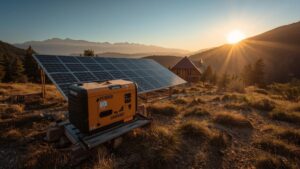
The debate between solar generator vs gas generator represents more than choosing between two technologies—it reflects fundamentally different philosophies about power, preparedness, and independence. Both systems convert stored energy into usable electricity, yet they differ so drastically in operation, maintenance, limitations, and practical application that comparing them requires examining nearly every aspect of how they function in real-world scenarios.
Understanding these differences becomes critical when living off grid solar power or simply preparing for emergencies. The wrong choice leads to frustration, wasted money, or inadequate power when you need it most. The right choice provides reliable electricity aligned with your actual usage patterns, environment, and values.
How Each Technology Actually Works
Gas generators produce electricity through mechanical processes dating back over a century. An internal combustion engine burns gasoline (or propane, diesel, or natural gas in some models) to spin an alternator, which generates electrical current through electromagnetic induction. This straightforward mechanical approach delivers immediate, substantial power on demand as long as fuel remains available.
The simplicity appeals to many users—add fuel, pull the starter cord, and electricity flows. No complex electronics, no waiting for batteries to charge, no dependency on weather conditions. The generator runs until the fuel tank empties, then you refill and continue.
Solar generators operate on entirely different principles. Photovoltaic panels convert sunlight into direct current electricity, which charges internal lithium batteries. When you need power, an inverter transforms that stored DC electricity into alternating current suitable for household devices. This electronic process produces zero emissions, operates silently, and requires no consumable fuel.
The sophistication of solar generator components—battery management systems, MPPT charge controllers, pure sine wave inverters—contrasts sharply with gas generators' mechanical simplicity. Yet this complexity remains invisible to users, who simply plug in devices and watch battery percentage decrease.
These fundamental operational differences cascade into every practical consideration when going off grid electricity or establishing backup power systems.
Power Output: Immediate vs Stored Energy
Gas generators excel at delivering substantial, continuous power. A typical 3000-watt portable gas generator produces enough electricity to run multiple appliances simultaneously—a refrigerator, several lights, a television, and a microwave all at once. Larger 7000-10,000 watt models handle even more demanding loads including central air conditioning, well pumps, and power tools.
This power continues uninterrupted as long as fuel flows. Need to run a space heater for six hours? No problem—just keep the tank full. Want to operate a table saw continuously while lights and a radio run? A properly sized gas generator handles this easily.
Solar generators store finite energy in batteries, fundamentally limiting continuous operation. A 2000Wh solar generator might power a 200-watt load for approximately 10 hours, but once depleted, it's useless until recharged. This makes solar generators better suited for intermittent loads and careful power management rather than continuous heavy consumption.
However, watt-hour ratings tell only part of the story. Solar generators also specify continuous and surge wattage—a 2000Wh unit might provide 2000W continuous output with 4000W surge capacity, plenty for most household devices excluding major appliances like air conditioners and electric heaters.
The real limitation isn't instantaneous power but sustained availability. A gas generator produces power indefinitely with fuel resupply; a solar generator eventually depletes and requires hours of solar charging or grid recharging to restore capacity.

Fuel Dependency vs Energy IndependenceGas generator disadvantages begin with their fundamental requirement for consumable fuel. A typical portable generator consumes 0.5-1.5 gallons per hour depending on load, meaning a 12-hour overnight backup requires 6-18 gallons of gasoline. Extended outages demand substantial fuel stockpiles and reliable supply chains.
Gasoline itself presents challenges—it degrades within months without stabilizers, poses fire hazards during storage, requires rotation to maintain freshness, and becomes unavailable precisely when most needed during widespread emergencies. Hurricane evacuations empty gas stations for hundreds of miles. Natural disasters disrupt fuel distribution for days or weeks.
This generator fuel dependency creates a paradox: gas generators provide seemingly unlimited runtime but only if you can continuously acquire fuel during exactly the situations that make fuel acquisition difficult or impossible.
Solar generators eliminate fuel dependency entirely, drawing power from sunlight—a resource that arrives daily regardless of supply chain disruptions, natural disasters, or societal upheaval. Once you own solar panels and a generator, you possess energy independence that no fuel shortage can compromise.
However, this independence comes with weather dependency. Cloudy days reduce solar production by 50-80%. Winter provides fewer daylight hours. Trees, buildings, or storms block sunlight entirely. Your energy independence is genuine but constrained by environmental conditions beyond your control.
Practical off grid portable power strategies often combine both technologies—solar for daily needs and extended scenarios, gas for high-demand situations and solar-inadequate conditions. This redundancy provides true resilience.
Indoor Safe Generator Comparison
Generator noise comparison matters less than the simple fact that gas generators cannot safely operate indoors under any circumstances. Carbon monoxide from combustion kills quickly—even garages with open doors don't provide adequate ventilation. Every year, dozens of Americans die from running generators inside homes during outages, despite warnings plastered across every unit.
This restriction means gas generators must run outside, separated from living spaces. Extension cords snake through doorways or windows, creating security concerns and inconvenience. Rain, snow, and temperature extremes affect performance. Theft becomes a legitimate concern when valuable equipment sits unattended outside.
Solar generators produce zero emissions and operate safely anywhere—bedrooms, living rooms, apartments, offices, RVs, or boats. This indoor safe generator comparison isn't even close—one technology demands outdoor operation with all its complications while the other works safely in any location.
For apartment dwellers, this single difference eliminates gas generators entirely. Building codes prohibit operating combustion equipment on balconies or patios. Neighbors rightfully complain about noise and fumes. Solar generators remain the only viable option for off grid backup power in multifamily housing.
The silent operation of solar technology extends beyond safety to quality of life. Gas generators produce 65-75 decibels at 20 feet—comparable to a vacuum cleaner or busy traffic. This noise continues constantly while running, annoying neighbors, preventing sleep, and creating stress during already difficult emergency situations.
Solar generators operate in absolute silence except for occasional cooling fan activation. You can sleep in the same room, conduct phone calls, or maintain peace without the constant mechanical drone of combustion engines.

Maintenance Requirements: Ongoing vs Minimal
Gas generator maintenance comparison reveals substantial ongoing commitment. Engines require oil changes every 50-100 hours of operation. Spark plugs need periodic replacement. Air filters clog and need cleaning or replacing. Fuel systems develop varnish from old gasoline. Carburetors require cleaning. Starting systems fail from disuse.
Even unused gas generators demand attention. Manufacturers recommend running them monthly under load to prevent carburetor issues, circulate oil, and ensure operational readiness. Fuel must be stabilized or drained for storage. Batteries powering electric start systems need charging.
Neglect any maintenance and your gas generator fails precisely when emergencies strike. Dead batteries prevent starting. Varnished carburetors block fuel flow. Degraded gasoline won't ignite. Seized engines from lack of use become expensive paperweights.
This maintenance burden intimidates many users, leading to neglect and unreliability. The perception of simplicity—just pull the cord and get power—masks substantial upkeep requirements for actual long-term reliability.
Solar generators need virtually no maintenance beyond ensuring batteries don't fully discharge during storage and keeping solar panels reasonably clean. No oil, no filters, no spark plugs, no fuel systems. Lithium batteries tolerate years of storage at partial charge without degradation. Electronics have no moving parts to wear out.
Testing quarterly and recharging as needed represents the total maintenance commitment—five minutes every few months versus hours of engine maintenance annually for gas generators.
Solar Generator Pros and Cons in Off-Grid Contexts
Advantages:
Zero fuel costs after initial investment
Silent operation suitable for any environment
Safe indoor use without ventilation concerns
Minimal maintenance requirements
Clean operation producing no emissions
Instant availability without starting procedures
Expandable capacity through additional batteries
Decreasing costs as technology improves
Excellent for low-to-moderate power needs
Sustainable indefinitely with adequate solar input
Limitations:
Higher upfront costs per watt of capacity
Weather-dependent recharging
Limited runtime on battery storage alone
Cannot match gas generators for sustained high-power loads
Recharging requires hours, not minutes
Battery degradation over 5-10 years eventually requires replacement
Insufficient for heating/cooling applications in most cases
Winter solar production significantly reduced
Initial learning curve for power management
Capacity constraints require careful load planning
Gas Generator Pros and Cons for Emergency Power
Advantages:
Lower initial purchase cost per watt
High continuous power output
Immediate, substantial electricity on demand
Proven, well-understood technology
Widely available repair services and parts
Can operate indefinitely with fuel resupply
Suitable for any load within rated capacity
No weather dependency for operation
Quick refueling restores full capacity
Handles heating and cooling equipment easily
Limitations:
Ongoing fuel costs and procurement challenges
Cannot operate safely indoors
Loud operation disturbs households and neighbors
Produces carbon monoxide and other emissions
Requires regular maintenance to ensure reliability
Fuel storage presents safety hazards
Supply chain dependent during emergencies
Heavy and awkward to move when fueled
Generates substantial heat during operation
Attracts attention and potential theft when running
Emergency Generator Types: Which Scenarios Favor Each Technology
Short power outages (1-4 hours) favor solar generators decisively. Brief disruptions need minimal power—lights, device charging, perhaps running a refrigerator intermittently. Starting a gas generator, dealing with noise and fumes for a few hours, then securing it afterward seems excessive when a silent solar unit sitting in your living room handles everything effortlessly.
Medium outages (4-24 hours) represent the crossover point where both technologies compete effectively. Solar generators with 2000-5000Wh capacity manage essential loads throughout if properly managed. Gas generators provide more capacity and flexibility but at the cost of noise, fumes, and maintenance. Choice depends on specific needs—a household requiring medical equipment might prefer solar's reliability and indoor operation, while those needing high continuous power lean toward gas.
Extended outages (24+ hours) expose both technologies' limitations. Gas generators require substantial fuel stockpiles—72 hours at half load consumes 25-40 gallons for typical portable units. Solar generators need consistent sunlight to recharge, which storms and winter conditions compromise. Living off grid solar power long-term demands either enormous battery banks or accepting reduced consumption during extended poor weather.
Seasonal considerations matter substantially. Summer offers long days and strong sunlight ideal for solar recharging, but also drives air conditioning demands beyond most solar generators' capabilities. Gas generators easily handle AC loads but consume fuel rapidly. Winter provides shorter days and weaker sun reducing solar production 60-80%, yet heating needs in electric or forced-air systems exceed most solar capacity. Gas generators handle winter loads but outdoor operation in freezing conditions affects reliability.
Geographic factors influence effectiveness dramatically. Desert and plains regions receive consistent, powerful solar energy making solar generators exceptionally effective year-round. Pacific Northwest winter clouds render solar nearly useless for weeks at a time, favoring gas backup. Hurricane zones face extended outages with initial cloud cover transitioning to excellent solar conditions as storms pass—solar provides indefinite sustainability once weather clears.
The Hybrid Approach: Leveraging Both Technologies
Many experienced off-grid households and preparedness-focused families ultimately adopt both technologies rather than choosing exclusively. This redundancy costs more initially but provides genuine resilience against diverse failure scenarios.
Solar as primary, gas as backup represents the most common hybrid approach. Daily needs and most emergency situations rely on silent, fuel-free solar power. The gas generator remains stored, maintained, but rarely operated—reserved for extended outages, high-power demands, or solar-inadequate weather conditions.
This strategy minimizes fuel consumption and maintenance while preserving high-power capability when truly needed. You might run solar exclusively for years, knowing substantial backup capacity exists if circumstances demand it.
Complementary capabilities allow each technology to cover the other's weaknesses. Solar handles overnight power after gas generators shut down for sleep. Gas generators rapidly recharge depleted solar batteries on cloudy days, much faster than solar panels alone. High-power tools run on gas while sensitive electronics operate on solar's clean sine wave power.
Cost optimization through hybrid systems lets you purchase smaller capacity of each than you'd need relying exclusively on one technology. A 3000Wh solar system plus 3000-watt gas generator handles scenarios requiring either 5000Wh battery capacity or 5000-watt continuous output—at lower total cost and greater flexibility than maximizing either technology independently.
Real-World Usage Patterns and Preferences
Recreational users overwhelmingly prefer solar for camping, tailgating, and outdoor activities. The silence, safety, and zero fuel requirements align perfectly with recreational goals. Gas generators remain popular for RVs and work sites requiring high continuous power, but solar dominates casual outdoor use.
Urban and suburban households increasingly choose solar for emergency preparedness. Indoor safe operation matters more in dense housing. Neighbors tolerate silent solar while complaining about gas generator noise. Building codes and HOA restrictions often prohibit gas generator operation but can't regulate battery-powered devices.
Rural homesteaders maintain mixed preferences. Those pursuing sustainable lifestyles and energy independence strongly favor solar despite higher costs and capacity constraints. Traditional preparedness-focused rural residents often prefer gas generators' proven capability and comfort with mechanical equipment, though many adopt solar for daily small loads.
Professional users in construction, events, and mobile businesses still rely predominantly on gas generators for their high, continuous power output. Solar generators slowly encroaching in this space for specific low-power professional applications like outdoor photography, mobile offices, and film production.
Future Trajectory: Technology Evolution and Cost Trends
Solar technology costs have plummeted 90% over 15 years while capacity and efficiency climbed steadily. This trend continues—batteries improve annually in energy density and longevity while prices decrease. Today's $1500 solar generator outperforms units costing $3000 just five years ago.
Gas generator technology has essentially plateaued. Modern units offer electronic fuel injection and fancier controls, but fundamental capability hasn't changed in decades. Prices rise with inflation while performance remains static.
This divergence suggests solar generators will dominate increasingly more applications over coming years as capacity grows and costs fall further. Gas generators will retain niches requiring maximum continuous power, but their market share will likely shrink as solar technology closes performance gaps.
Environmental regulations increasingly restrict gas generator operation in urban areas due to emissions and noise. California and other jurisdictions have banned or severely limited small engine equipment sales. These regulations don't affect battery-powered solar technology, giving it regulatory advantages beyond technical merits.
Making Your Decision: Matching Technology to Needs
The solar generator vs gas generator debate has no universal winner—only better choices for specific circumstances.
Choose solar generators when:
Operating indoors or in noise-sensitive environments
Fuel procurement is uncertain or undesirable
Loads are low-to-moderate and intermittent
Sustainability and energy independence are priorities
Maintenance requirements need minimizing
Multiple-day sustainability with solar recharging is feasible
Silent operation matters for quality of life
Apartment or urban living limits gas generator options
Choose gas generators when:
High continuous power output is essential
Loads include major appliances or power tools
Weather conditions compromise solar production reliability
Immediate full-capacity restoration via refueling is important
Lower initial costs matter more than operating expenses
You're comfortable with mechanical maintenance
Adequate fuel storage and procurement is assured
Outdoor operation space is available
Choose both when:
Budget allows initial investment in redundant systems
Genuine resilience across diverse scenarios is the goal
You want optimal tool for each specific situation
Long-term off-grid living or comprehensive preparedness is planned
Complementary capabilities justify the additional complexity
Understanding the gas generator vs battery generator comparison ultimately reveals they're tools for different jobs despite superficially similar functions. Like choosing between a chainsaw and a handsaw—both cut wood, but contexts determine which tool serves better. Your specific needs, environment, values, and circumstances should guide technology selection, not abstract superiority claims for either approach.
The future increasingly points toward solar dominance as technology improves and costs fall, but gas generators will remain relevant for high-power applications and situations where solar's limitations prove insurmountable. Most prepared households will likely maintain both, using each where it excels while accepting neither perfectly solves every power challenge.
Comments
Copyright © YourCompany. All Rights Reserved