Published January 12, 2026
How Off-Grid Solar Generators Are Used for Home Backup
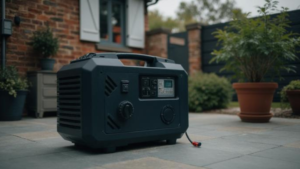
Power outages have evolved from minor inconveniences into potentially serious disruptions as modern life grows increasingly dependent on electricity. Refrigerated medications spoil, home offices shut down, security systems fail, and comfort evaporates along with heating or cooling. Off-grid solar generators have emerged as practical solutions for maintaining essential power during grid failures, though their effectiveness depends entirely on matching system capabilities to realistic household needs.
Understanding how off-grid solar generators work in backup scenarios requires shifting perspective from recreational use to home resilience. The strategies, priorities, and expectations differ substantially when protecting your household rather than powering a camping trip.
The Reality of Power Outages and Backup PlanningMost people dramatically overestimate what they need during outages and underestimate how long disruptions last. This mismatch leads to either oversized systems that waste money or undersized units that disappoint when actually needed.
Short outages (1-4 hours) represent the majority of grid failures. These brief interruptions barely register if you have basic lighting and can keep phones charged. A small 500Wh solar generator handles these situations effortlessly, maintaining communication and comfort until power returns.
Medium outages (4-24 hours) test preparation more seriously. Food safety becomes a concern as refrigerators warm, especially in summer. Work-from-home professionals lose productivity. Medical devices like CPAP machines or oxygen concentrators become critical rather than convenient. Medium-sized systems between 1000-2000Wh manage these scenarios when paired with thoughtful load management.
Extended outages (24+ hours) separate adequate preparation from wishful thinking. Multi-day blackouts during severe weather events, infrastructure failures, or natural disasters require either substantial battery capacity, robust solar recharging, or both. These situations expose the limitations of smaller systems and reveal why many households invest in expandable power station off grid configurations.
The frequency and typical duration of outages in your region should guide backup planning more than worst-case scenarios. A area experiencing brief monthly outages needs different infrastructure than locations facing occasional multi-day winter storm blackouts.
Critical Loads vs Comfort Loads: Making Hard Choices
Effective solar generator off grid use for home backup starts with categorizing household electrical loads by necessity rather than desire. This prioritization determines system sizing and usage strategies during actual emergencies.
Critical loads encompass truly essential devices that protect health, safety, or valuable property:
Medical equipment tops this list—CPAP machines, oxygen concentrators, nebulizers, refrigerated medications, and powered wheelchairs cannot be compromised. A CPAP drawing 30-60 watts might consume 240-480Wh overnight, making this single device a primary consideration for many households.
Communication devices including phones, tablets, and internet modems keep you connected to emergency services, family members, and vital information. Fortunately, these devices draw minimal power—charging a smartphone 10 times consumes roughly 100Wh total.
Refrigeration preserves food and medications, though modern refrigerators cycle on and off rather than running continuously. A typical unit might draw 150 watts when running but only operates 8-12 hours daily in total runtime, consuming 1200-1800Wh. This intermittent operation makes refrigeration more manageable than continuous power requirements suggest.
Essential lighting enables safe movement through homes after dark and maintains security. LED lighting draws so little power—a 10-watt bulb running 5 hours consumes just 50Wh—that lighting barely impacts backup calculations when using efficient technology.
Comfort loads enhance livability but don't qualify as necessities:
Entertainment devices like televisions, gaming systems, and streaming equipment maintain morale during extended outages but can be temporarily sacrificed. A 100-watt television running 4 hours daily consumes 400Wh—not enormous, but meaningful when capacity is limited.
Computers beyond basic communication devices support work and entertainment but rarely qualify as critical unless you're running a home business. A laptop drawing 50 watts for 8 hours uses 400Wh daily.
Cooking appliances including microwaves, coffee makers, and toasters consume substantial power for brief periods. A 1000-watt microwave running 10 minutes uses approximately 170Wh, but many backup scenarios allow cold meals or alternative cooking methods.
Climate control represents the most power-hungry comfort consideration. Air conditioners and space heaters typically exceed what all but the largest solar generators can provide. A box fan drawing 50 watts offers a compromise, consuming 600Wh over 12 hours—manageable but significant.
The distinction between critical and comfort loads isn't universal—it depends on individual circumstances, health conditions, climate, and personal priorities. A household with asthmatic children might consider air quality devices critical, while others view them as optional.
Understanding Battery Capacity in Backup Contexts
Solar generator components function identically whether powering recreational devices or backing up homes, but the stakes and expectations differ substantially. Battery capacity becomes the limiting factor in most backup scenarios.
A 1000Wh battery might seem substantial until you calculate actual household consumption. Running a refrigerator (150W average over time), charging devices (50W), operating LED lights (30W), and powering a laptop (50W) draws approximately 280 watts continuously. At this rate, a 1000Wh battery depletes in roughly 3-3.5 hours accounting for inverter efficiency losses.
This harsh reality surprises people expecting batteries to last days. The solution involves either dramatically increasing capacity, severely limiting loads, or—most practically—combining both approaches with smart management.
Time-shifting loads spreads consumption across available capacity. Run the refrigerator for one hour, let it coast on thermal mass while charging devices, then run it again. This sequencing rather than simultaneous operation extends battery life considerably.
Solar recharging changes everything about multi-day outages. A 1000Wh battery might only power your home for 4 hours alone, but paired with 400 watts of solar panels generating 2000Wh daily in good conditions, suddenly you're producing more than you're consuming for light loads. This transforms a 4-hour emergency supply into indefinite sustainability.
Weather dependency represents the catch—solar recharging works beautifully until the storm causing your outage also blocks the sun. This reality makes battery capacity crucial for the first 24-48 hours of any outage, with solar serving as backup for extended scenarios if conditions permit.
Understanding how off-grid solar generators work in backup roles means appreciating this delicate balance between storage, consumption, and production. No single factor dominates—success requires optimizing all three elements together.
Partial vs Full Home Backup Strategies
Most households using solar generators for backup employ partial coverage strategies rather than attempting to maintain normal electrical consumption during outages.
Critical circuit backup involves identifying specific circuits powering essential loads and managing only those during outages. This might mean a single outlet in the kitchen for the refrigerator, bedroom outlets for medical devices and lighting, and one location for charging devices. Total load remains manageable—perhaps 500-1000 watts maximum simultaneous draw.
This approach requires extension cords or transfer switches connecting critical devices to your generator rather than attempting to power your entire electrical panel. The inconvenience of manual connections is offset by dramatically reduced capacity requirements and costs.
Room-based backup focuses power in a single area rather than attempting to maintain the entire home. During winter outages, you might consolidate family activities in one room with lights, device charging, and a small heater, letting the rest of the house go dark and cold. Summer scenarios might prioritize cooling a bedroom for sleeping while accepting higher temperatures elsewhere.
This concentration of resources extends available capacity substantially compared to spreading it thin across an entire home.
Full home backup requires professional-grade systems far beyond typical portable solar generators. Maintaining normal household electrical consumption—refrigerators, freezers, well pumps, heating/cooling systems, lighting throughout, entertainment, and appliances—demands 5000Wh minimum battery capacity for even modest homes, more realistically 10,000-20,000Wh for comfort.
Most people pursuing full home backup investigate permanently installed systems rather than portable generators, though some expandable power station off grid configurations bridge this gap by linking multiple units together.
The Expandable System Concept
Traditional solar generators arrived as sealed units—you purchased specific capacity and lived within those constraints forever. Modern systems increasingly feature expandability, transforming how people approach home backup.
Battery expansion allows adding additional capacity modules to existing generators. You might start with 1000Wh and later add 2000Wh more as budget permits or needs evolve. This modular approach reduces initial investment while providing growth paths.
The technology enabling this varies—some systems use proprietary battery modules that click together, others allow external batteries to connect via standardized ports. The specifics matter less than the principle: capacity can scale with your requirements.
Parallel operation connects multiple complete generators to share loads and combine capacity. Two 2000Wh units running in parallel provide 4000Wh storage and double the power output—enough to run larger appliances and extend backup duration substantially.
This flexibility proves particularly valuable for households growing into solar backup. Start with one unit for basic needs, add a second later for redundancy and capacity, potentially add a third for full home coverage during extended outages.
Solar input scalability allows connecting additional panels as needed. A generator might ship with 200 watts of solar capacity but accept up to 800 watts of input. As your backup strategy matures, adding panels improves recharging speed and enables longer sustainable operation.
Expandability transforms solar generators from fixed tools into adaptable systems that evolve with your needs, budget, and understanding of actual power requirements.
Real-World Backup Scenarios and Strategies
Practical examples illustrate how households implement solar backup effectively despite capacity constraints.
Scenario 1: Urban apartment dweller experiences occasional 2-6 hour outages. A 500Wh generator keeps phones charged, runs LED lights, and powers a laptop for entertainment or work. No refrigeration concerns due to short duration. Total cost under $500, fits in a closet, requires no installation. Perfectly adequate for actual needs despite seeming minimal.
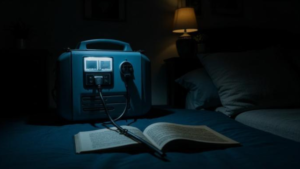
Scenario 2: Suburban family with medical needs requires CPAP operation nightly plus basic household function. A 2000Wh system with 400W solar panels handles the CPAP (400Wh nightly), charges devices, operates LED lighting, and manages refrigerator intermittently through careful sequencing. Solar recharging enables multi-day sustainability if sun cooperates. Extension cords connect critical loads to generator during outages rather than whole-home integration.
Scenario 3: Rural household with frequent winter storms faces 24-72 hour outages several times annually. Two 3000Wh generators in parallel provide 6000Wh capacity and 5000W output. This handles well pump, refrigerator, freezer, heating system (if gas with electric ignition), lighting, and devices simultaneously. Solar panels add resilience but winter conditions limit charging. System represents significant investment but provides near-normal functionality during extended outages.
Scenario 4: Coastal retiree in hurricane zone needs 3-7 day backup capability post-storm. Multiple expandable units totaling 10,000Wh capacity paired with 1200W solar array enables extended operation. Critical loads only—refrigeration, fans, lighting, communication devices, medical equipment. Propane cooking and careful power management stretch capacity. Solar recharging typically available within 24-48 hours as storms pass, enabling indefinite sustainability.
These scenarios share common elements: realistic assessment of needs, prioritization of critical loads, acceptance that backup differs from normal operation, and matching investment to actual rather than imagined requirements.
Integration with Existing Home Systems
Solar generators exist on a spectrum from completely portable units requiring no installation to semi-permanent backup systems integrating with home electrical infrastructure.
Basic integration involves nothing more than extension cords connecting specific devices to your generator during outages. Zero installation, maximum flexibility, minor inconvenience. This suits most households using smaller systems for limited backup.
Transfer switches provide safer, more convenient connections between generators and home circuits. These devices let you switch specific circuits from grid power to generator power without dangerous backfeeding or tangled extension cords. Manual transfer switches cost $200-500 installed and significantly improve usability.
Sub-panel integration creates a dedicated circuit breaker panel containing only critical loads, powered by your generator during outages and grid power normally. This professional installation provides the convenience of automated backup without the cost of full-home systems.
Most solar generator off grid use for backup falls in the basic-to-moderate integration range. The portability and simplicity that make solar generators attractive also somewhat conflicts with permanent installation—users often want equipment available for camping, lending to family, or taking to alternative locations rather than permanently wiring it into their homes.
Maintenance and Readiness for Emergency Use
Unlike gasoline generators requiring regular operation, oil changes, and fuel stabilization, solar generators need minimal maintenance. However, backup readiness requires attention.
Battery health depends on storage conditions and charge levels. Lithium batteries should be stored at 50-70% charge in moderate temperatures, checked every 3-4 months, and topped off as needed. Storing fully charged or completely depleted damages capacity over time.
Component testing ensures your system works when needed. Quarterly testing—running actual loads, verifying solar charging, checking displays and outlets—prevents discovering failures during emergencies.
Load planning documentation keeps your backup strategy fresh. List critical devices, their power requirements, connection points, and usage priorities. During actual emergencies, stress and time pressure make remembering details difficult.
Solar panel accessibility matters more than people expect. Panels stored in garages or basements don't help during outages. Keeping them accessible and knowing deployment locations before emergencies arrive prevents scrambling in the dark.
The Psychology of Backup Power
Beyond technical considerations, solar backup provides psychological benefits often overlooked in purely practical discussions.
Control and agency during uncontrollable situations reduces stress substantially. Knowing you can maintain critical functions while neighbors sit in darkness provides comfort proportional to actual capacity.
Family security extends beyond physical safety to emotional wellbeing. Children handle outages better when parents project confidence backed by actual preparedness.
Practice builds competence that matters during real emergencies. Families occasionally shutting off breakers and running on backup power develop skills and identify problems before stakes are high.
The peace of mind from proper backup preparation justifies investment even if you rarely use capacity. Like insurance, the value lies partly in simply knowing protection exists.
Understanding how solar generators function in backup roles reveals they're tools requiring strategy, not magic boxes providing unlimited power. Success comes from matching capabilities to realistic needs, prioritizing ruthlessly, managing loads intelligently, and accepting that backup operation differs from normal consumption. Within these constraints, modern solar technology provides genuine resilience against grid failures that seem increasingly frequent and extended.
Comments
Copyright © YourCompany. All Rights Reserved